
The 300 odd kms from Rameswaram to Kanyakumari took us a shade under five hours.
The roads are excellent and very scenic as we got closer to the destination especially after Tutukodhi.
We made a booking through Makemytrip.com for Kanyakumari. The hotel – Ocean Heritage boasted of proximity to the beach and the major tourist sites.
Since we arrived a day earlier at Kanyakumari, we were lucky and fortunate that we were able to get accommodation at the same hotel.
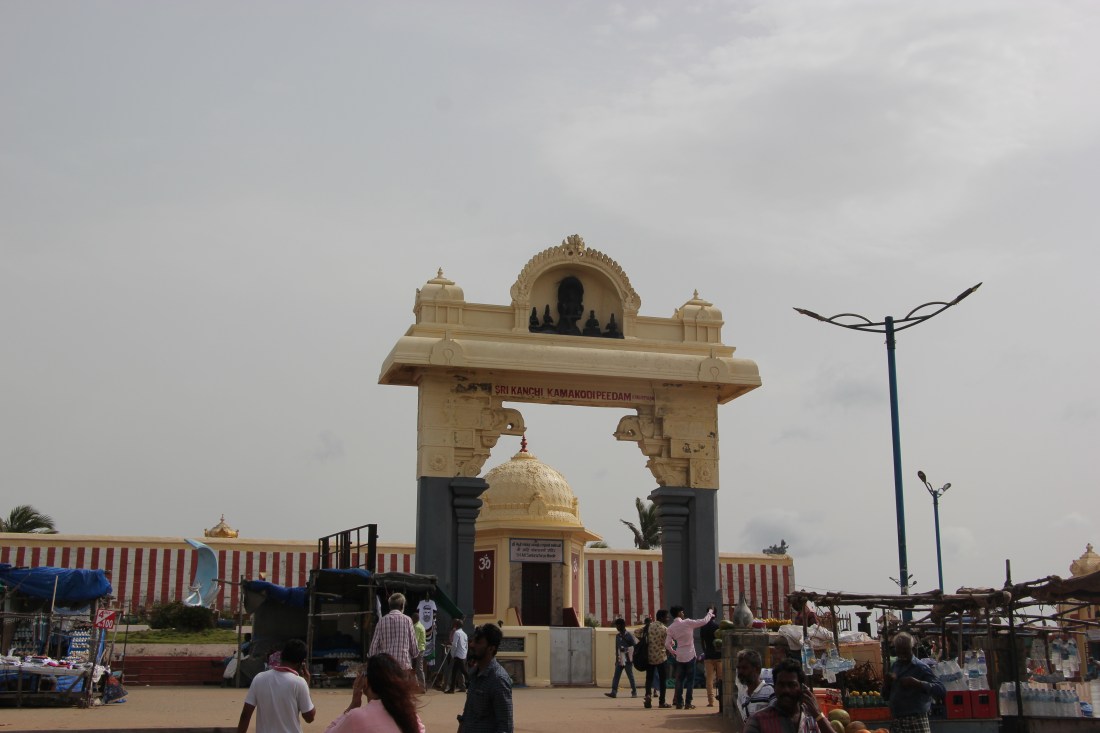
Kanyakumari is notable for pilgrimage and tourism.
The place takes its name from the goddess Devi Kanya Kumari, considered to be a sister of Krishna. Women pray to her for a happy and successful marriage. The goddess is believed to be the one who removes rigidity from our mind.
The temple here is a Shakti Peetha, one of the holiest shrines of the Mother goddess. Also nearby are eleven sacred theertham (tanks/wells).
The place was called Kanyashram of the Baalaambika, the deity of the temple.
The sea ablution for Pitr Tarpan is done here. (Pitr Tarpan is the ritualistic homage performed for the souls of departed ancestors. Water is offered to their souls or Pitr. The souls of the ancestors expect from their descendants this offering of water).
This is one of the rare temples in India where Devi (Mother Goddess) is worshipped as a child. The rites and rituals are done in the Kerala Namboothiri method, so there are slight differences in the way of worship compared to the temples of the nearby region. The deity is the goddess of Sanyasa a, so people from all over India who desire to devote their life as Sanyasin (ascetic) come here and take the deeksha. Swami Vivekananda came to this temple as directed by his Guru Shri Ramakrishna Praramahamsa, to take Deeksha and commit himself as a sanyasi. The temple is very old and is mentioned in ancient Sanskrit literature.
The beach sands are multi-colored and likened to a mythological story (I am not aware of this story but I shall research and revert).
There is a shrine for Kalabhairava in the temple. It is said that the backbone area of Sati Devi’s corpse fell here.
The place is famous for Agastya mala where Sage Agastya lived. He is the founder of Siddha Vidhya, so there are innumerable medicinal plants available here. He is also considered as the founder of Varma Kalai, a form of martial arts.
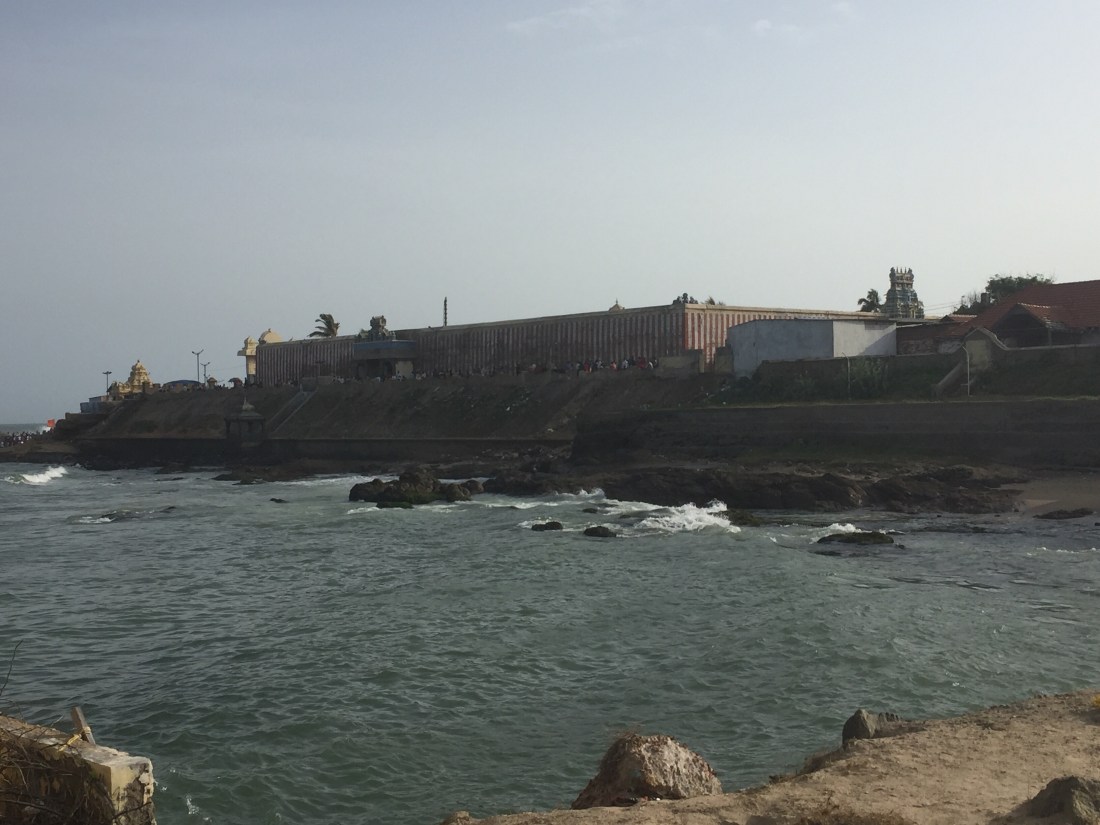
History
It is important to know the history of this region/district as it appears to have been under the control or influence of all the dominant South Indian/Deccan dynasties at some time or the other over the past millennia.
Kanyakumari District consists of those parts known locally as Nanjil Nadu and Idai Nadu. The names of the villages of the district such as Azhagiapaandipuram, Bhoothapandy, Cholapuram and Kulasekaram reveal that these places were governed by several rulers at different periods of time. Nanjil Nadu was under the rule of Pandiyas until the early 10th century and then under Cheras.
The Kalkulam and Vilavancode taluks were under the rule of the Chera Dynasty. When the power of Chola declined due to the rise of Hoysalas and western Chalukyas, the Venad (Travancore) Chieftains (descendants of the central Chera family) took advantage of the situation and gradually established their hold on considerable areas in Nanjil Nadu. Veera Kerala Varma, one such chieftain, styled himself as “Nanjil Kuravan”. The annexation commenced by Veera Kerala Varma was to a large extent continued by his successors and completed by AD 1115.
For about four centuries, the Venad was ruled by powerful kings who were consistently making incursions into the Pandian territories. As a result, Vijayanagar kings proceeded against Venad. In 1609 Kanyakumari fell into the hands of Viswanatha Nayak of Madurai. Consequent to this, there was no serious threat to Nanjil Nadu until 1634. During the regime of Ravi Varma and Marthanda Varma, Venad was disturbed by the internal strife.
Sanda Sahib of Arcot took advantage of this situation and attacked Nanjilnadu. Although Marthanda Varma was victorious in the battle of Colachel and defeated the Dutch armouries who helped the local feudatories, he could not cope with the threat from Sanda Sahib, which forced him to withdraw from the battlefield. After Marthanda Varma, Venad had weak rulers and as a result there was frequent interference by the British (who knew it as Kanyakumari) whose control was completely established over Venad and continued until 1947. From 1947 to 1956, it was under the personal rule of Maharaja of Travancore. Later it was reoccupied and merged with Tamilnadu.
Marthanda Varma – regarded as the most famous King of Travancore, who defeated the Dutch and made Tipu Sultan withdraw from battle.
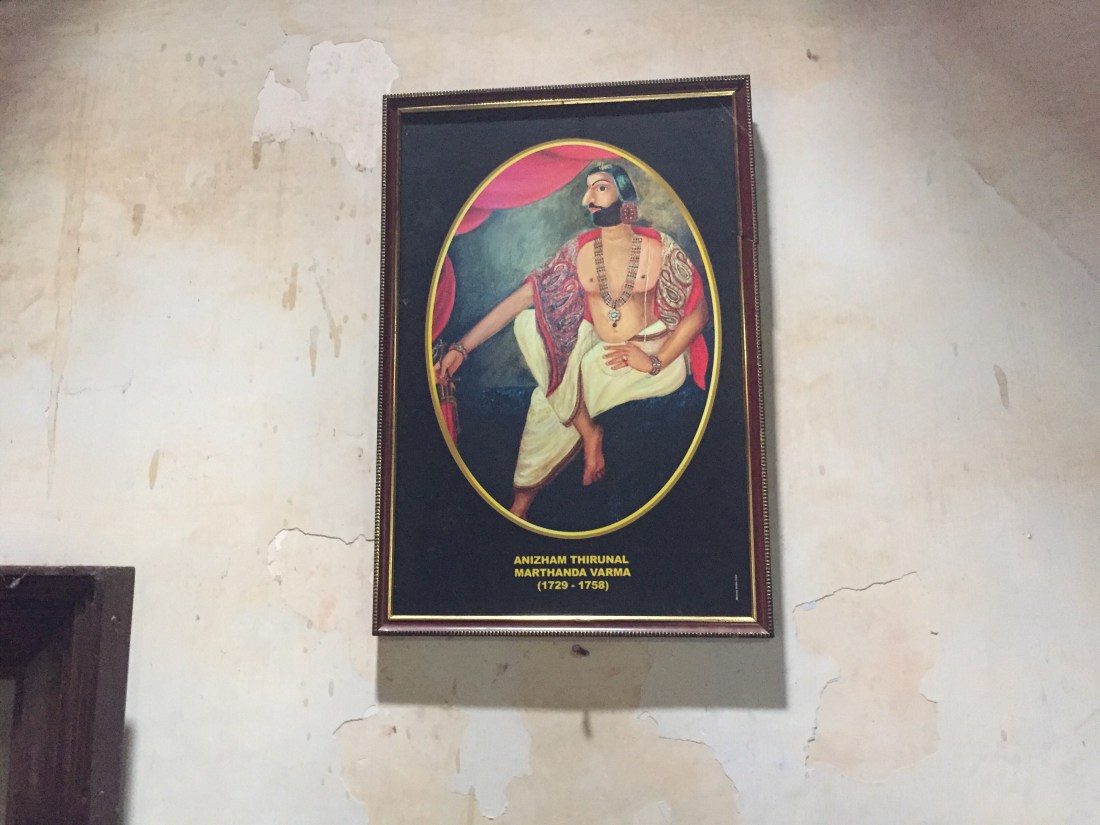
Marthanda Varma (born Anizham Thirunal Marthanda Varma; 1705 – 7 July 1758) was ruler of the southern Indian state of Travancore from 1729 until his death in 1758. He is most celebrated for crushing the Dutch expansionist designs at the Battle of Colachel in 1741. Marthanda Varma, then adopted a European mode of martial discipline and expanded his domain to encompass what became the modern state of Travancore.
Marthanda Varma built a substantial standing army of about 50,000, reduced the power of the Nair aristocracy (on which rulers of Kerala had earlier been dependent militarily), and fortified the northern limits of his kingdom at the so-called Travancore Lines. His alliance in 1757 with the ruler of Kochi, against Kingdom of Kozhikode, enabled Kochi to survive.
Travancore under Marthanda Varma did make a determined bid to consolidate its power by the use of maritime outlets. At his accession to the throne in early 18th century, the only route remaining was Thiruvithaamkoor to build an elaborate and well-organized war machine while keeping external supply lines open. The control of trade was also seen as crucial in the statecraft of the period. These principles were put into practice by Marthanda Varma.
It was also the policy of Marthanda Varma to extend patronage to the Syrian Christians, a large trading community in Thiruvithaamkoor, as a means of limiting European involvement in trade. The key commodity was pepper, but other goods also came to be defined as Royal Monopoly Items, requiring a license for trade. Thiruvananthapuram (Trivandrum) became a prominent city in Kerala under Marthanda Varma. Prime ministers under Marthanda Varma – Arumukham Pillai (1729 – 36), Thanu Pillai (1736 – 37) and Ramayyan Dalawa (1737 – 56) – played a significant role in the raise of the Thiruvithaamkoor state.
Marthanda Varma’s policies were continued in large measure by his successor and nephew, Karthika Thirunal Rama Varma (“Dharma Raja”) (1758–98), who went on to successfully defend Thiruvithaamkoor against the Kingdom of Mysore.
Day 1
Check in and walk on the beach road, hordes of pilgrim-tourists. Most of the pilgrims appeared to be from UP, Bihar region mixed with some from Punjab-Haryana.
We visited the Devi Temple, it was just before closing time and there was not much of crowds and we could have a comfortable darshan, though we had to vacate the premises as it was closing time. The most striking aspect of the deity is the sparkling diamond nose rings, that shone like lamps in the reflected light of the oil light lamps. The deity faces the South to the sea, unlike the traditional east facing idols. The gate to the south (sea) is now closed and open only during festival days. It is reported during ancient days the “Goddess” gaze was open to the sea, and at night the reflected light from the diamond nose-rings would act as a beacon guiding the fishermen and sailors to safety.
Day 2
At 0530 hours we went to the rooftop hoping to glimpse the sunrise, however due to the sky overcast with dark monsoon clouds, we were unable to view the sunrise.
We also experienced a Christian version of the “Azaan” , it commenced at 0530 hours and extended past 0600 hours from a nearby church the “Our Lady of Ransom Church”. While one appreciates the freedom of religious expression, the delivered sermon through several high decibel loud speakers does mar the expected tranquility and spirituality of observing the sunrise at the very tip of the subcontinent. It was jarring especially as one who studied in a convent, I had always associated churches with the solemn dignity of the faithful praying in silence, and of course the church choir, that needed no loudspeaker but the amplification under the vaulted ceiling.
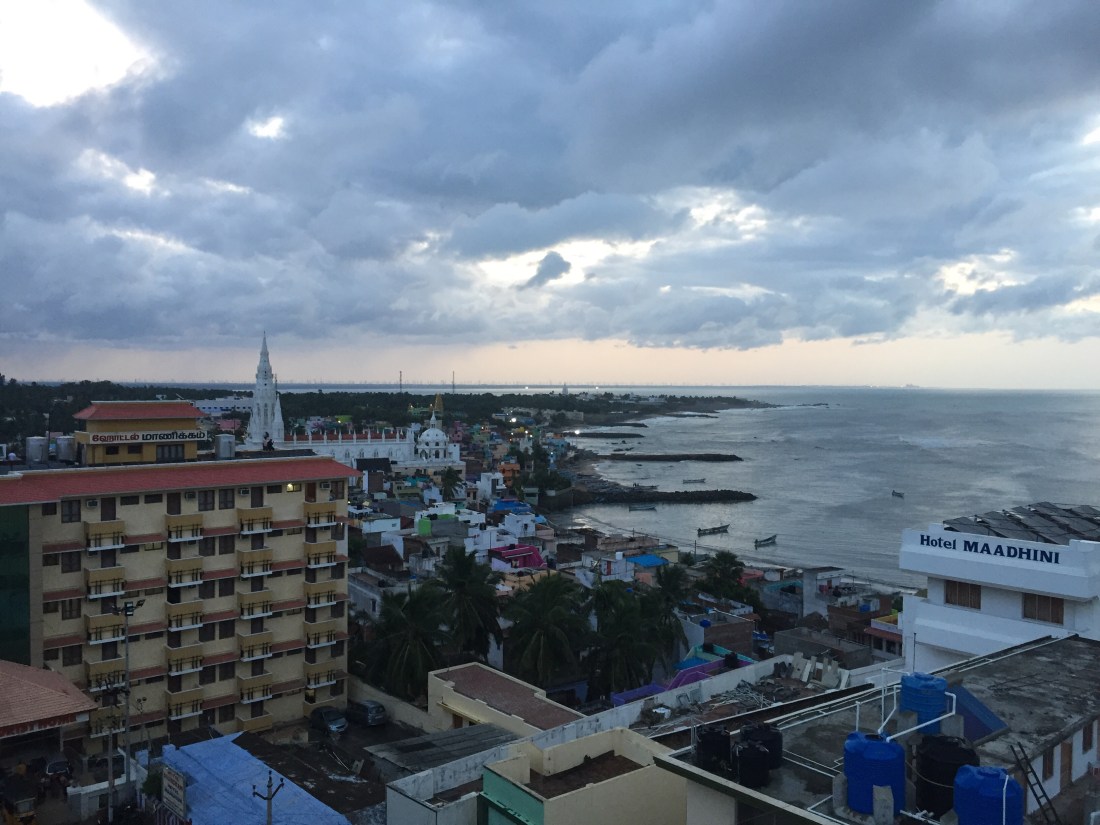
After a buffet breakfast at the hotel, we had a leisurely visit to the Devi temple, Akshay wandered off on his own exploring the town.
We revisited the Devi temple during the day and a small monument to Vivekananda that is looked after by a volunteer, after his retirement.
We spent the day recovering relaxing and recuperating from the effects of weeklong travel. It was a day to chill with leisurely walks along the seaface and beaches.
Day 3
Padmanabhapuram Palace is a Travancore era palace located in Padmanabhapuram, Kalkulam taluk of Kanyakumari District, Tamil Nadu.
Padmanabhapuram is the former capital city of the erstwhile Hindu Kingdom of Travancore. It is around 20km from Nagercoil, and 60km from Thiruvananthapuram city. The palace is complex inside with an old granite fortress around four kilometers long. The palace is located at the foot of the Veli Hills, which forms a part of the Western Ghats. The river Valli flows nearby. Another palace known as Kuttalam Palace which is also in Tamil Nadu but is under the ownership of Kerala government. It is situated in the Tenkashi, Tirunelveli District, Tamil Nadu (before state reorganization, Kanyakumari District, Chenkottah Taluk, Tenkashi Taluk including the areas of Kuttalam were in the control of Travancore).
The palace was constructed around 1601 AD by Iravi Varma Kulasekhara Perumal who ruled Venad between 1592 and 1609. It is believed that the Thai Kottaram was built in 1550. The founder of modern Travancore, King Anizham Thirunal Marthanda Varma (1706–1758) who ruled Travancore from 1729 to 1758, rebuilt the palace in around 1750. King Marthanda Varma dedicated the kingdom to his family deity Sree Padmanabha, a form of Lord Vishnu and ruled the kingdom as Padmanabha dasa or servant of Lord Padmanabha. Hence the name Padmanabhapuram or City of Lord Padmanabha. In the late 18th century, precisely in 1795 the capital of Travancore was shifted from here to Thiruvananthapuram, and the place lost its former glory. However, the palace complex continues to be one of the best examples of traditional Kerala architecture, and some portions of the sprawling complex are also the hallmark of traditional Kerala style architecture. The Palace though surrounded entirely by the State of Tamil Nadu is still part of Kerala and the land and Palace belongs to the Government of Kerala. This Palace is maintained by the Govt. of Kerala Archaeology Department.
The Padmanabhapuram Palace complex consists of several structures:
- Mantrasala; the King’s Council
- ChambThai Kottaram; the Queen Mother’s Palace, constructed before 1550
- Nataksala; the Performance Hall
- A four-storied mansion at the centre of the complex
- Thekee Kottaram; the Southern Palace

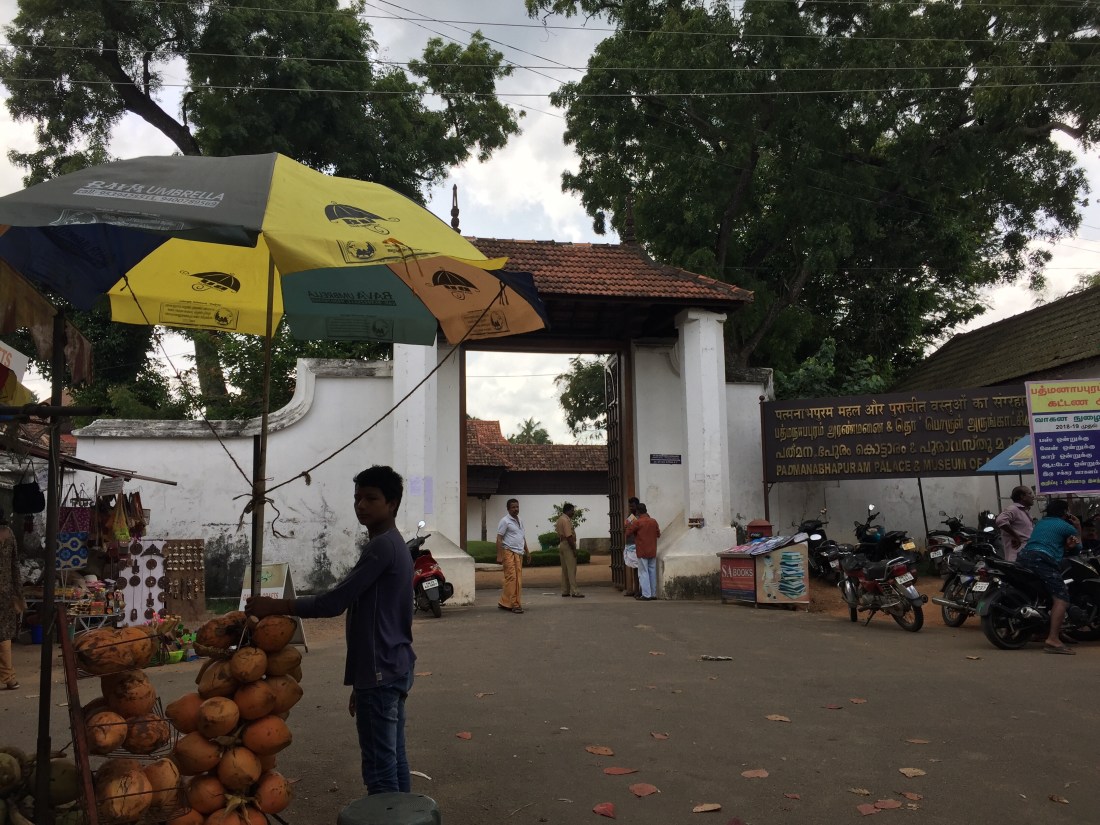
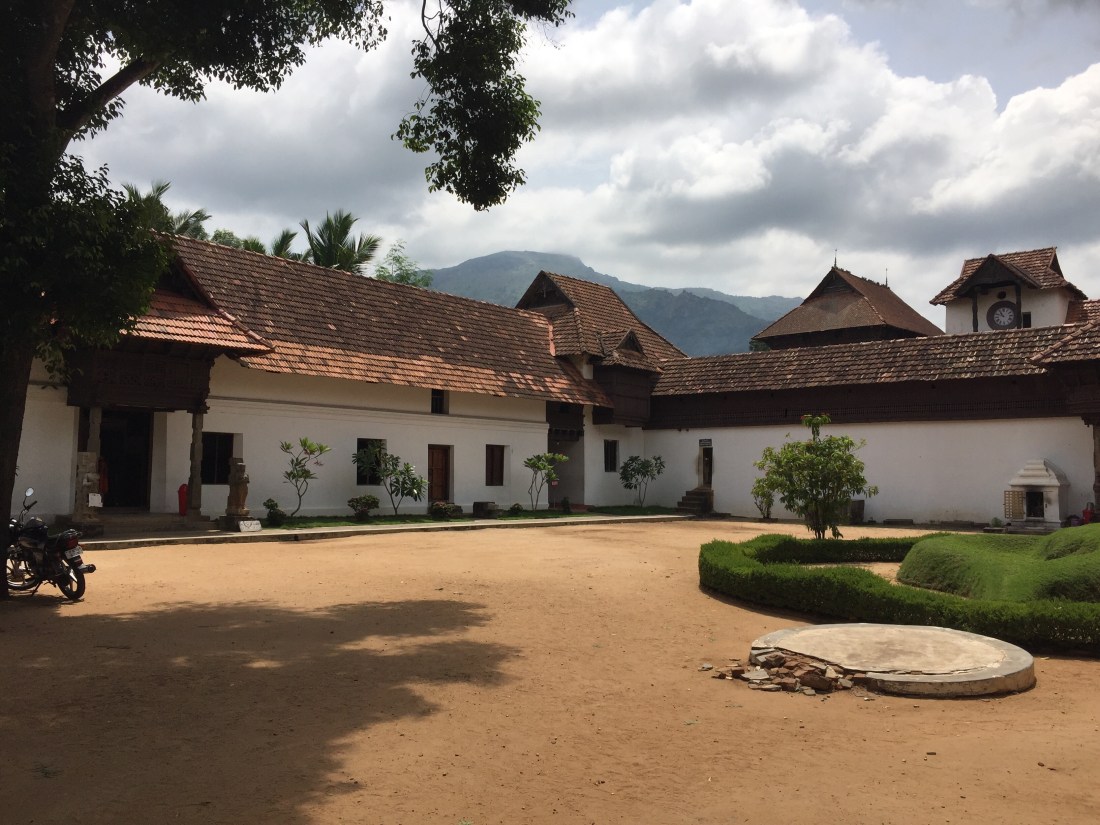
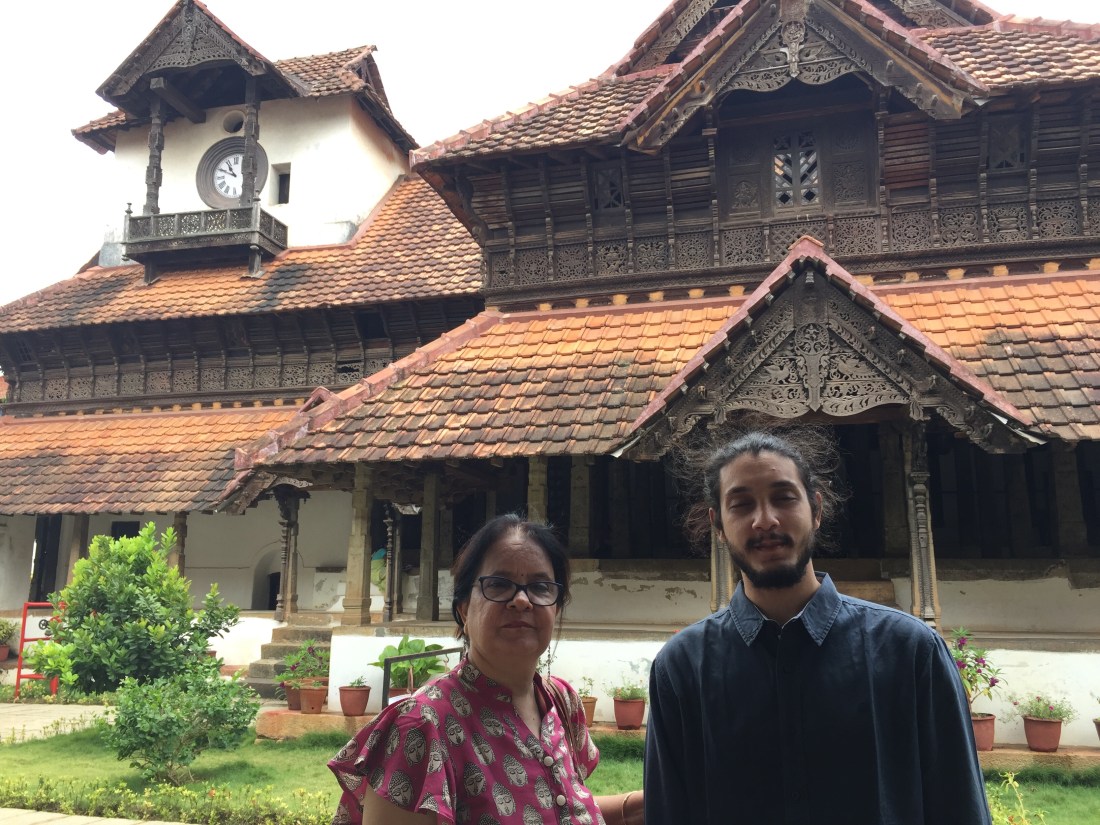
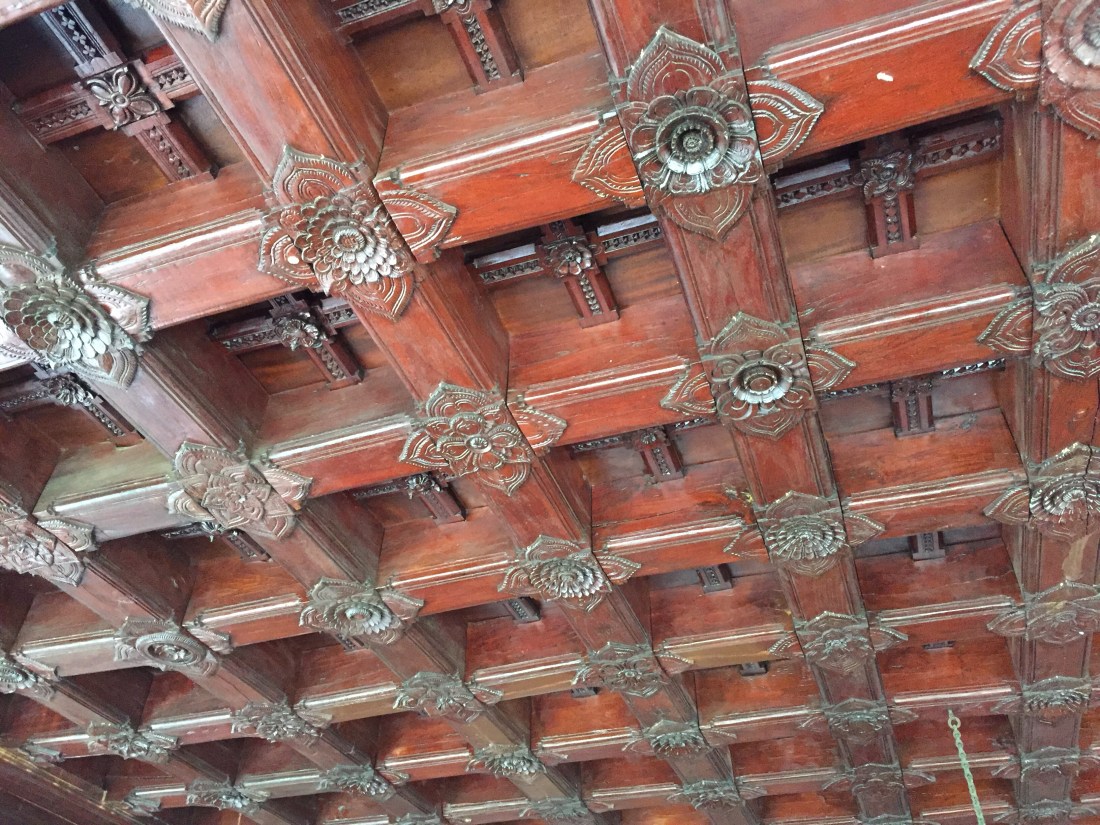
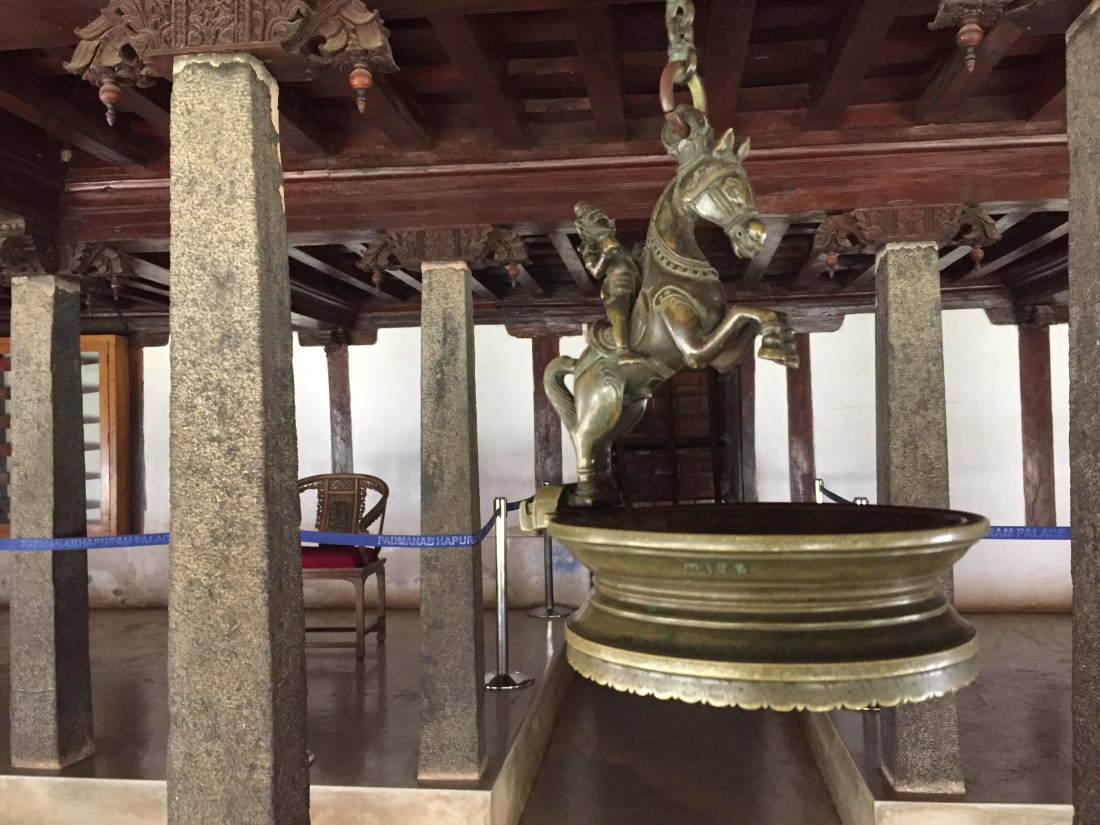

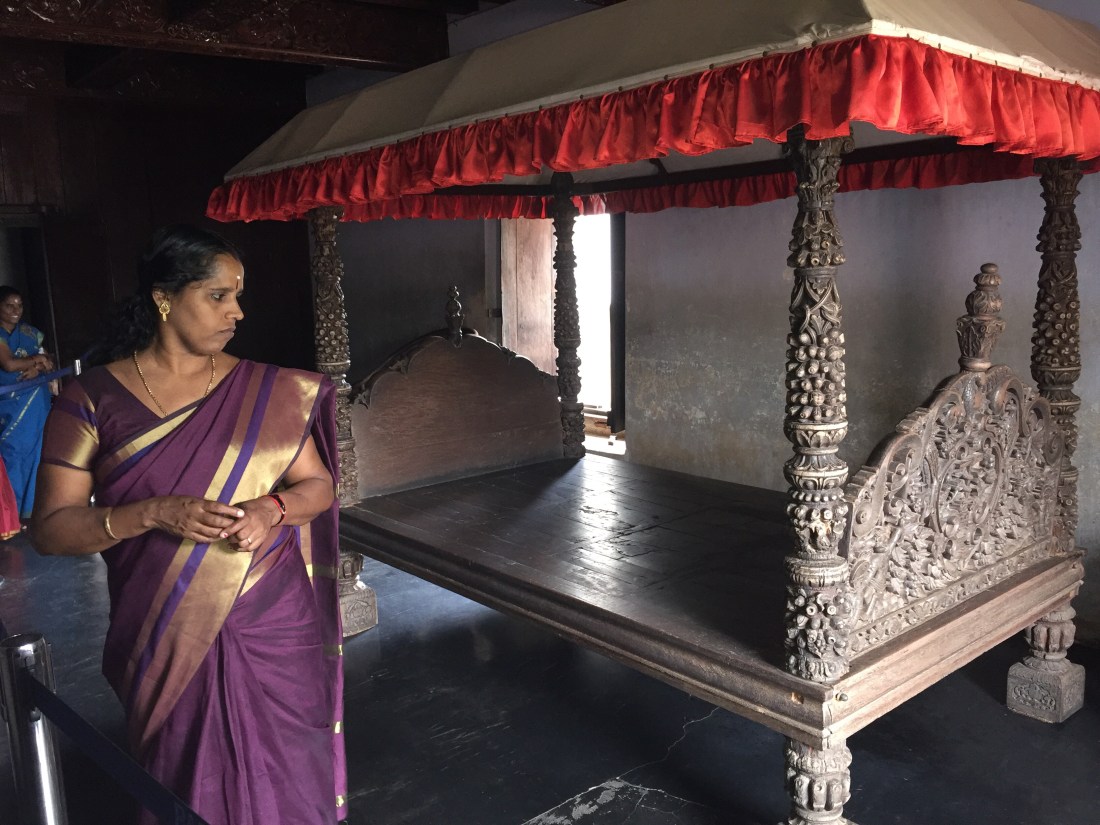
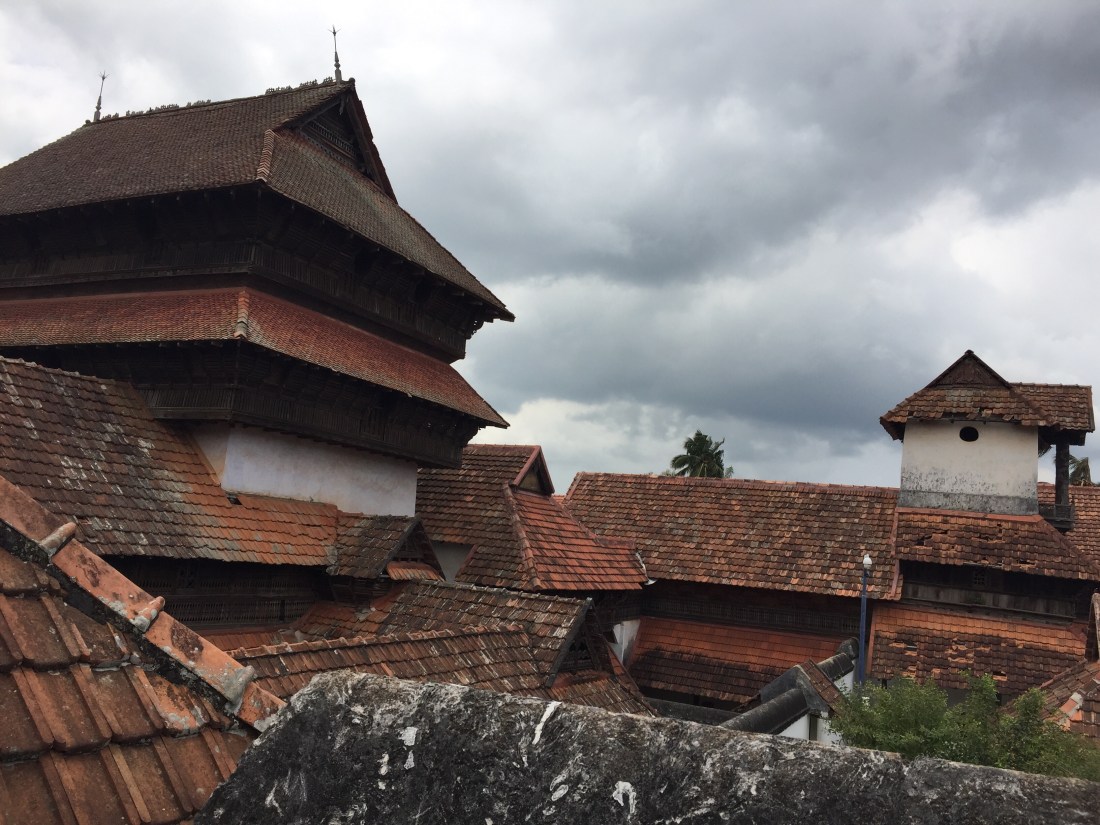
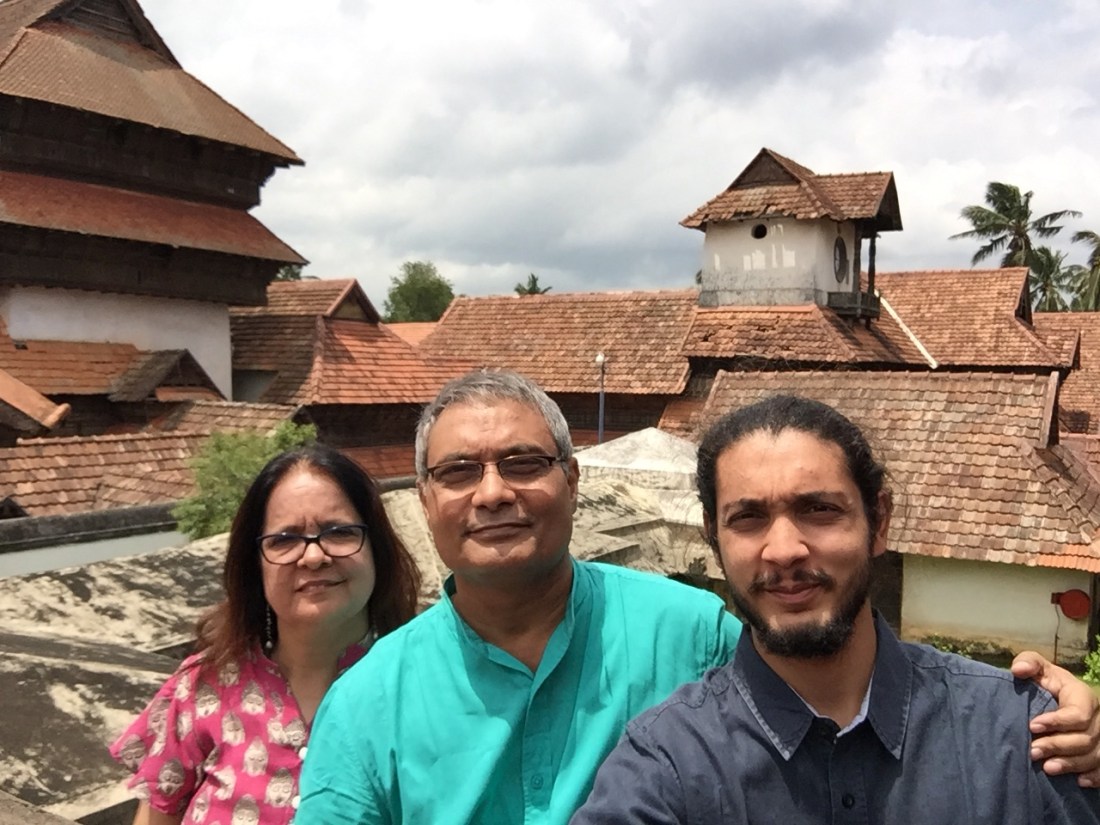
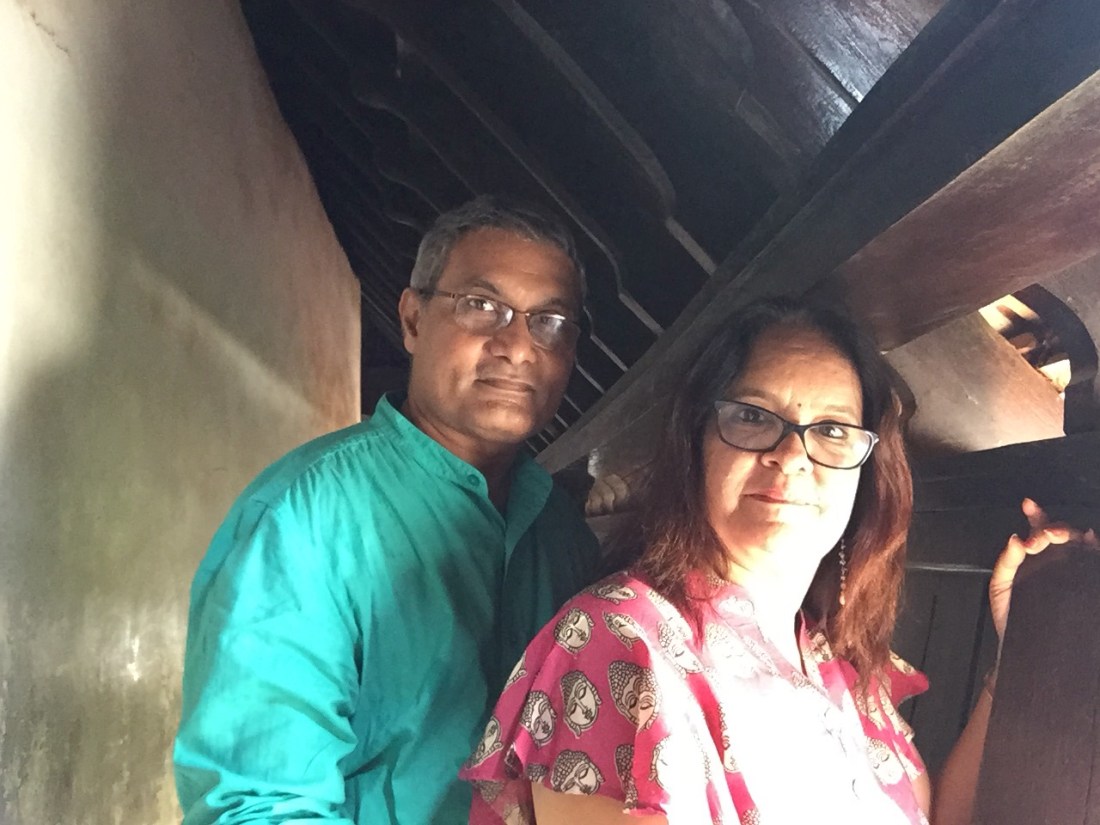
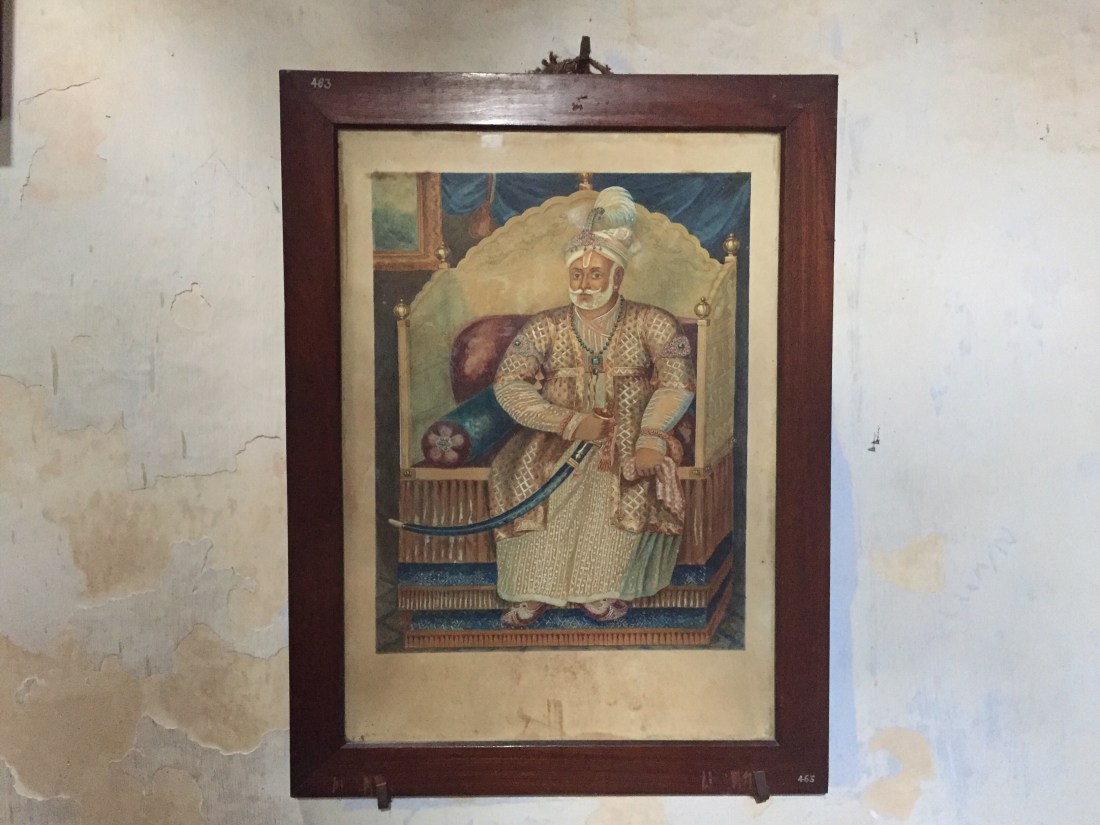

The Kerala government is to be congratulated for the maintenance and upkeep of the palace, they have ensured that there is a guide at each of the locations, though the knowledge of these guides/attendants at each location is without any depth – it is sufficient for a casual visitor but unsatisfying for a serious tourist.
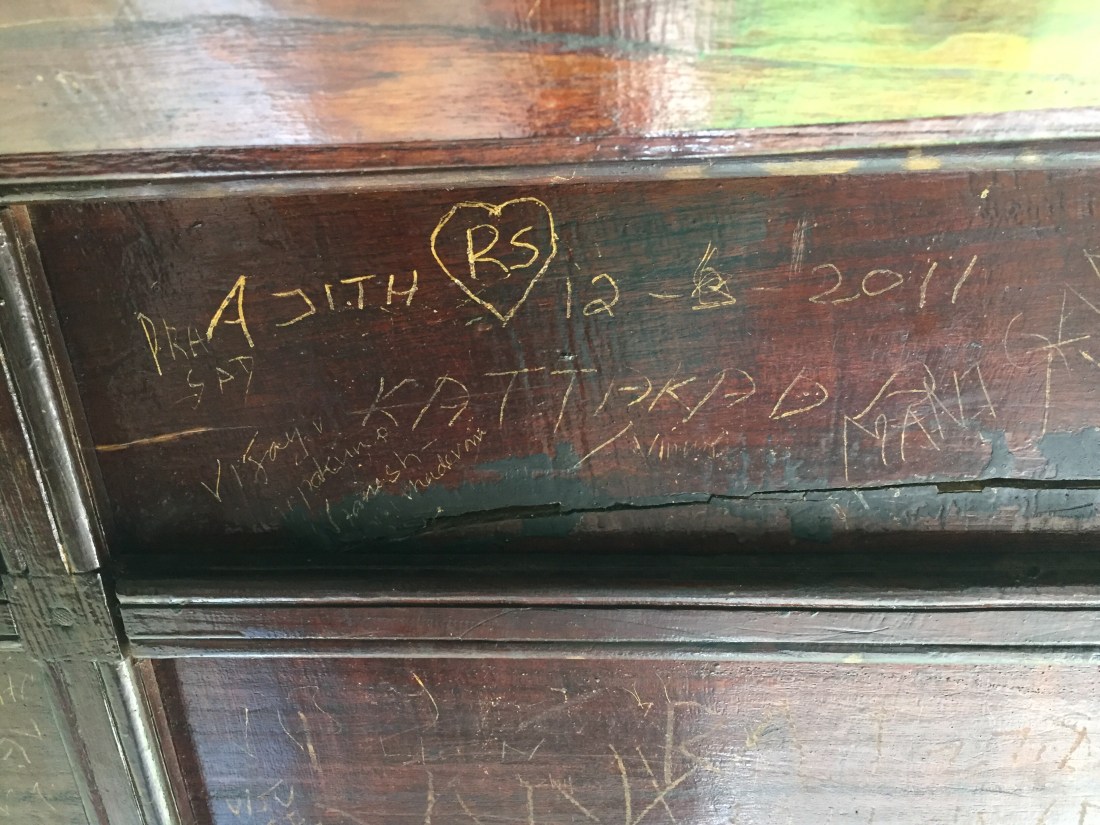
Despite the continuous presence of these attendants, we found evidence of defacement/vandalism.
The visit to the Padmanabhapuram Palace, was one of the highlights of our visit to Kanyakumari, and we spent so much time at the palace that we had to drop our visit to some of the nearby tourist attractions.
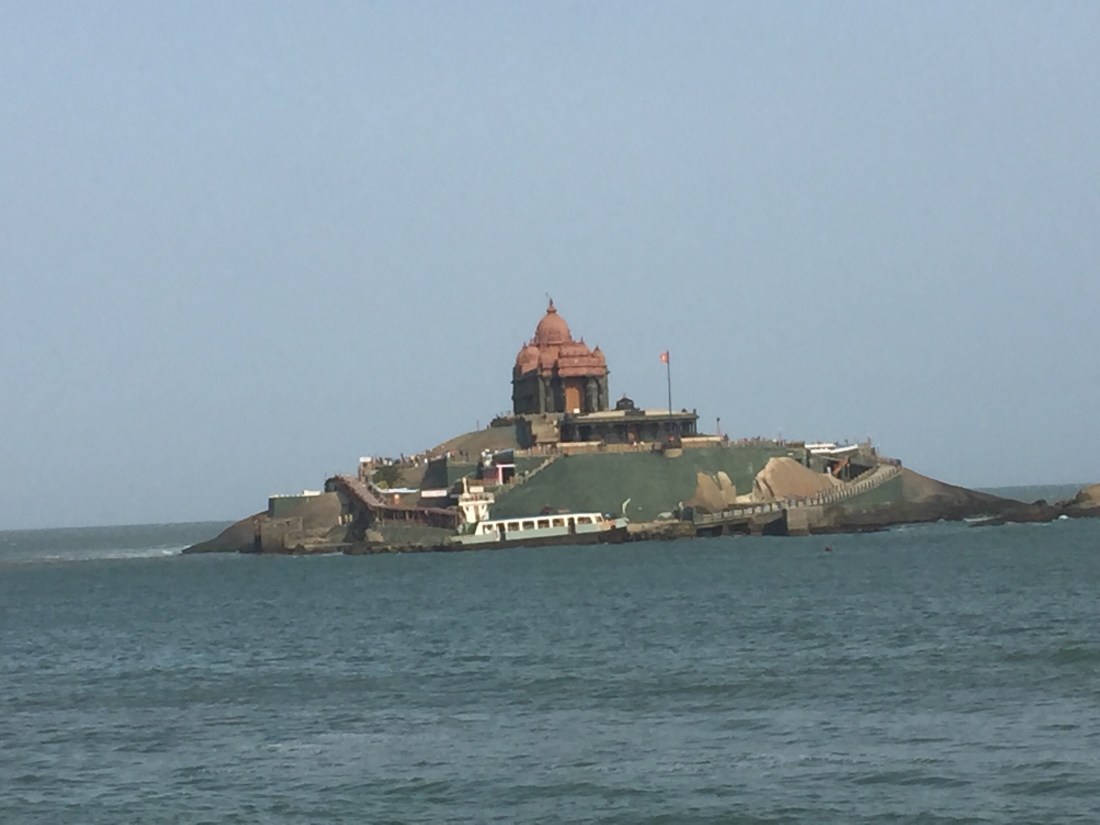
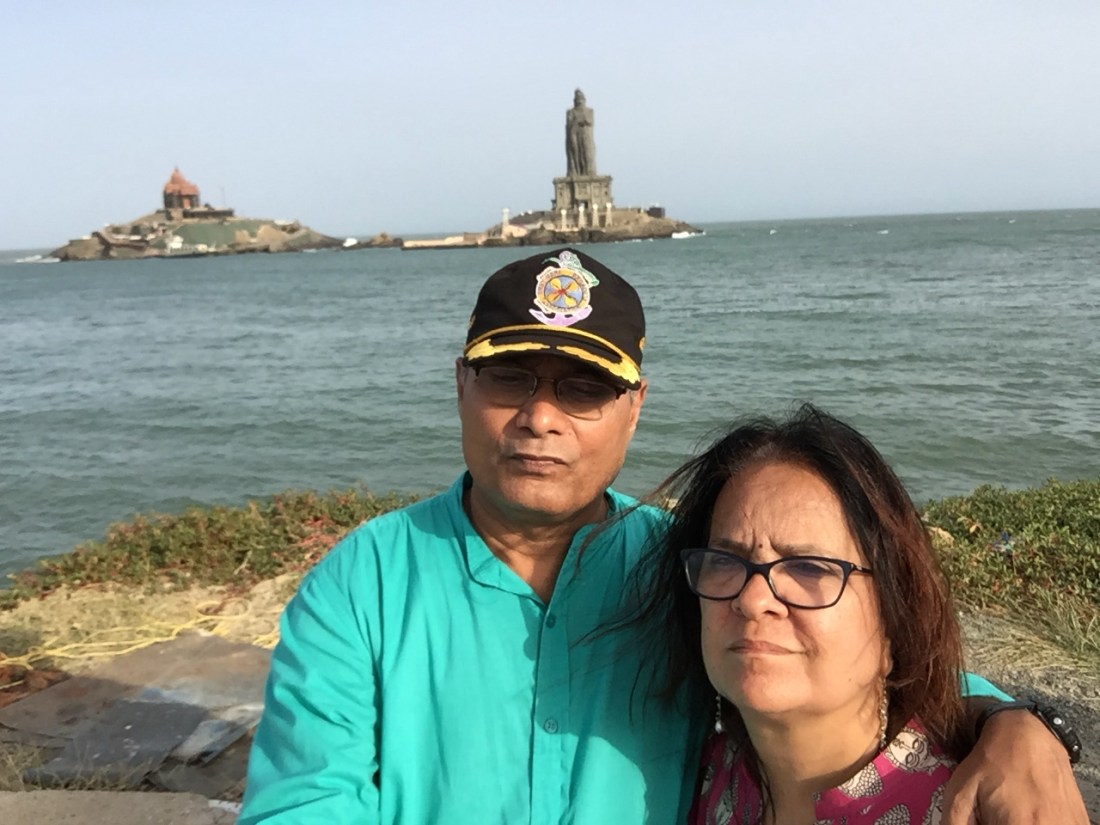
We returned to Kanyakumari, just in time to catch one of the last ferries to the Vivekananda Rock, it is impossible to describe the feeling of standing at the absolute Southernmost part of India, it has to be experienced. We picked up a couple of books on the teachings of Vivekananda and his Guru Shri Ramakrishna Paramahamsa.
The Vivekananda Rock Memorial stands on one of two rocks located about 500 meters east of the mainland of Vavathurai. It was built in 1970 in honor of Swami Vivekananda who is said to have attained enlightenment on the rock. According to local legends, it was on this rock that Goddess Kumari performed austerity. A meditation hall (Dhyana Mandapam) is also attached to the memorial for visitors to meditate. The design of the mandapa incorporates different styles of temple architecture from all over India. It houses a statue of Vivekananda. The rocks are surrounded by the Laccadive Sea. The memorial consists of two main structures, the Vivekananda Mandapam and the Shripada Mandapam.
 u
u

The Gandhi Memorial Mandapam has been built on the spot where the urn containing the Mahatma’s ashes was kept for public viewing before immersion. Resembling central Indian Hindu temples in form, the memorial was designed in such a way that on Mahatma Gandhi’s birthday, 2 October, the first rays of the sun fall on the exact place where his ashes were kept.

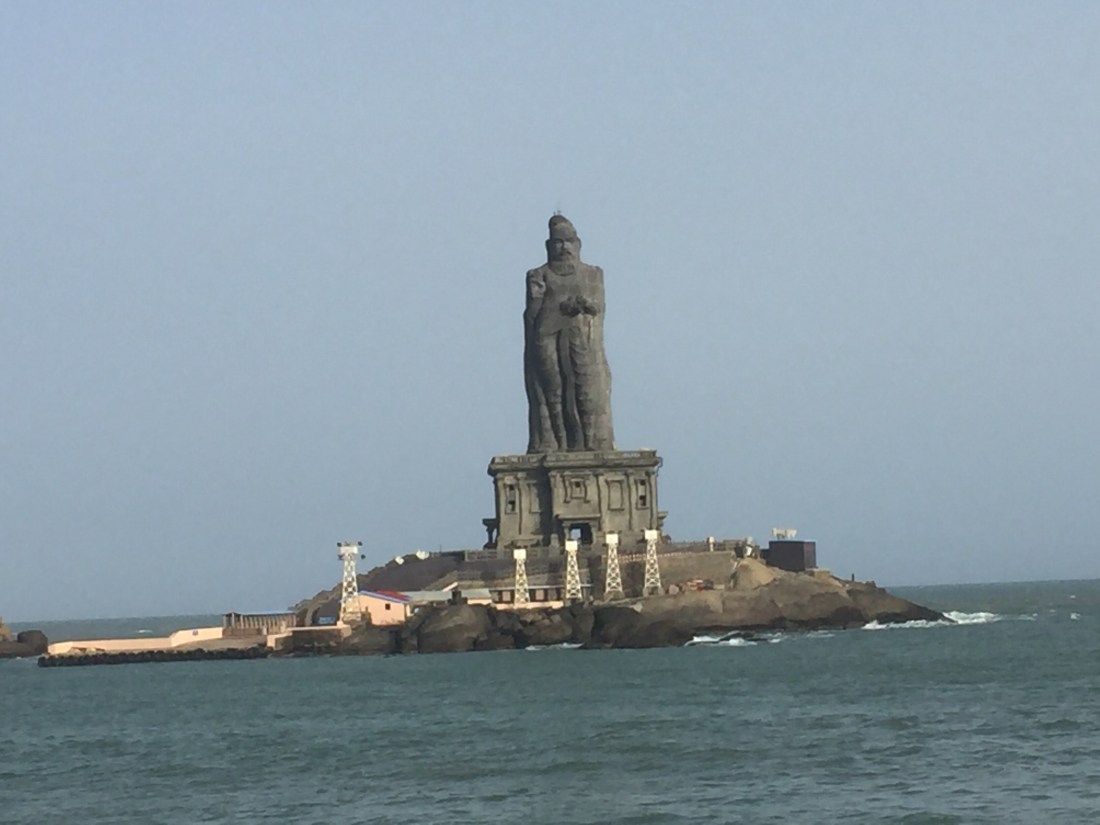
The Thiruvalluvar Statue has a height of 95 feet (29 m) and stands upon a 38 foot (11.5 m) rock that represents the 38 chapters of “virtue” in the Thirukkural. The statue standing on the rock represents “wealth” and “pleasures”, signifying that wealth and love be earned and enjoyed on the foundation of solid virtue. The combined height of the statue and pedestal is 133 feet (40.5 m), denoting the 133 chapters in the Thirukkural. It has a total weight of 7000 tons. The statue, with its slight bend around the waist is reminiscent of a dancing pose of the ancient Indian deities like Nataraja. It was sculpted by the Indian sculptor Dr. V. Ganapati Sthapati, who also created the Iraivan Temple. Its opening ceremony was on 1 January 2000. The monument was hit by the Indian Ocean tsunami on 26 December 2004, but stood unaffected. The statue is designed to survive earthquakes of unexpected magnitude, such as magnitude 6 on the Richter Scale occurring within 100 kilometers. This is far beyond that of any event recorded in the regional history. During maintenance work, as well as during rough sea, entry is restricted for tourists, and this was the reason we were unable to visit this landmark.
Day 4
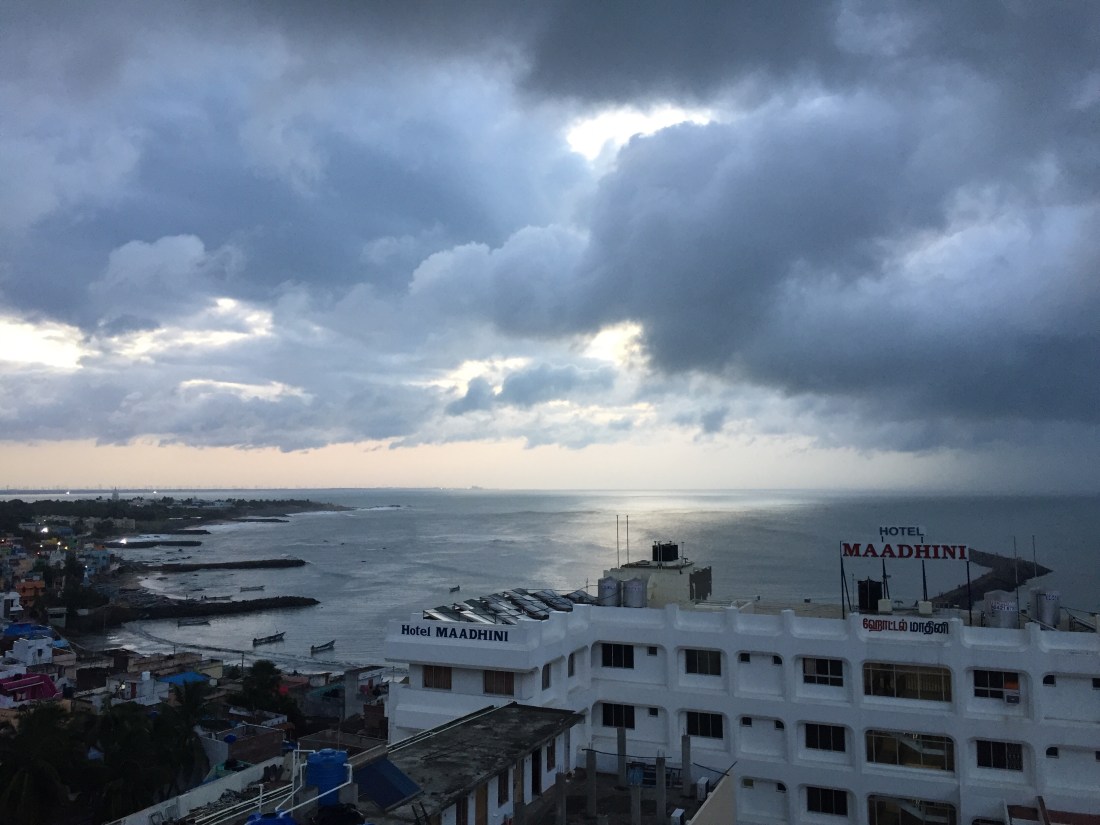
We witnessed a form of daybreak through a break in the clouds, the resulting photographs showed the clouds at their monsoon best.

Checkout and drive to our next destination Madurai.
Eating Out @ Kanyakumari
The prolific eateries boasting of Thalis from Delhi, Punjab, Rajasthan, Gujarat bear testimony to the cosmopolitan nature of the visitors.
We had a lunch at one of the Bhojnalays, a Rajasthani outlet, the food was awesome, fresh and tasty – strictly vegetarian but far too much quantity for our metropolitan appetite.
Our favorite was Pappu’s outlet for snacks, this was our favorite breakfast joint, steaming hot idlis, just off the cooker, but terrible coffee – too sweet.

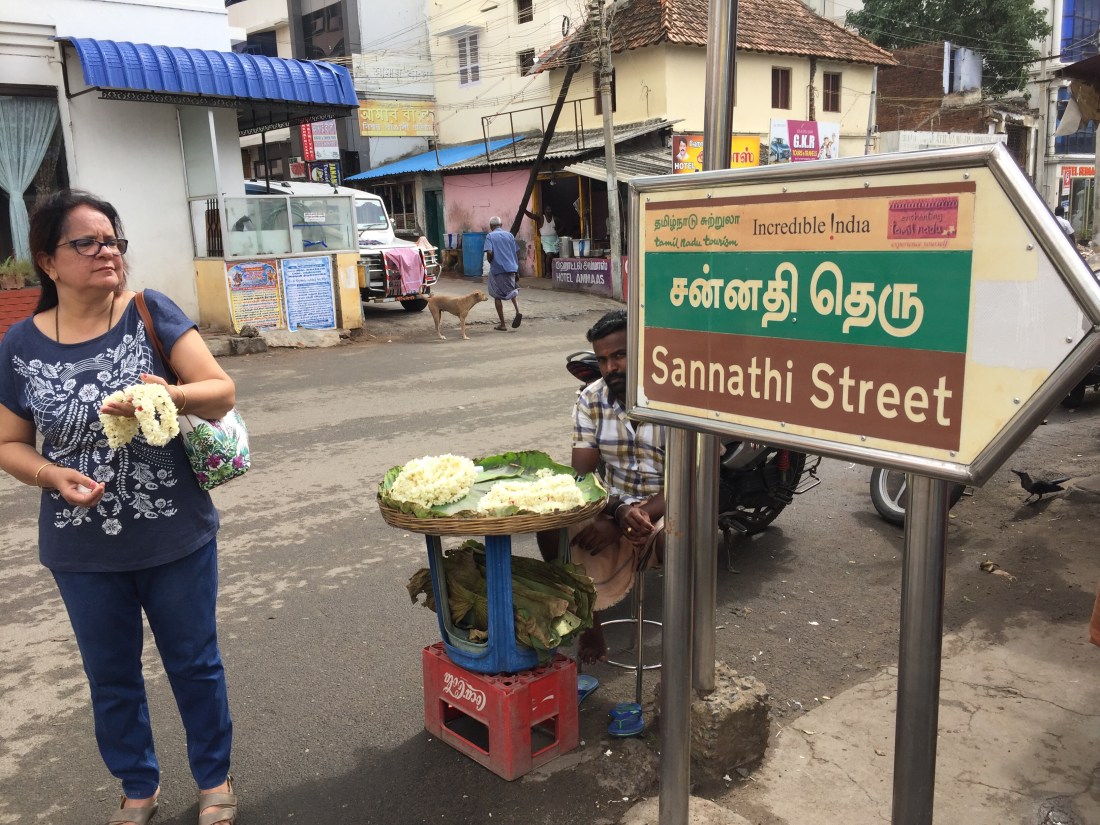
Despite the crowding, the public areas are much cleaner than one expects from such towns, I base my observations from my experiences at Ajmer, Somnath and Pandharpur – though these recollections are about 5-6 years ago, I sincerely hope that “Swacch Bharat” campaign has made these towns cleaner.
I attribute the cleaner look, not to any drive or initiatives by the powers that be, but the general awareness of the public and the increased self respect and esteem brought about by increased education especially women’s education.
 Walkabout with Anil
Made a good read. Im inspired by you to start a blog on human resources.
LikeLiked by 1 person
Thanks Anita, look 👀 forward to your blog
LikeLike
Excellent Anil,…great start. keep going places. Good idea for retirement time.– Stephen
LikeLike
Thanks Stephen, gives me the “enthusiasm “ to write more
LikeLike
Well written, beautiful snapS
LikeLike
Done some further editing
LikeLike
What a trip! Great to hear your travels xx
LikeLike
Thanks
LikeLike
Good begining Anil.
Keep writing, you have a good natural flow of words.
Keep it going.
LikeLike
Thanks Ramesh for your kind words and encouragement
LikeLike
Each of your photos do speak a 1000 words
LikeLike
thank you madhu-san
LikeLike
Might be this is the myth behind the sand color in Kanyakumari https://brownwanderer.wordpress.com/2012/05/29/myth-about-kanyakumari/
LikeLike
Thanks Sugan 🙏🏼
LikeLike
That’s a nice photo story. Pls spare some time to read my blog on Thiruvalluvar Statue in Kanyakumari. Hope you like it!
https://statuesofindia.wordpress.com/2018/10/25/thiruvalluvar-statue-a-tribute-to-wisdom-knowledge/
LikeLike